

7 min read · Last updated July 27, 2026
- Federally funded health centers are legally required to see patients regardless of ability to pay, and to discount fees on a sliding scale based only on income and family size.
- At or below 100% of the 2026 poverty guideline ($15,960 for one person, $33,000 for a family of four), you get a full discount or a nominal charge, meaning a small flat fee. Above 200%, no discount is required.
- Between those two lines, health centers must offer at least three discount pay classes, so the bill steps down as income falls.
- If you have insurance and qualify for a discount, your out-of-pocket cost cannot exceed what your discount pay class would have charged.
In this article
- What the sliding fee discount program is
- Who qualifies in 2026
- What the discount covers
- How to apply
- Why people pay more than they should
- Frequently asked questions
Dana is 34, uninsured since she left a restaurant job in March, and earns $2,400 a month driving for a delivery service. That is $28,800 a year. She has been putting off a persistent cough for four months because she assumes a clinic visit runs $200 before anyone looks at her. At a federally funded health center, the only two facts allowed to set her bill are that $28,800 and the fact that her household is one person.
What the sliding fee discount program is
Every health center funded under Section 330 of the Public Health Service Act operates under a binding requirement: no patient shall be denied service because of an inability to pay. To make that real, each center must maintain a schedule of fees and a corresponding schedule of discounts, adjusted to the patient’s ability to pay. The Health Resources and Services Administration lays out the rules in Chapter 9 of the Health Center Program Compliance Manual.
This is not charity care that a clinic may offer if it feels generous. It is a condition of federal funding, and centers are audited on it. In 2024, more than 32.4 million people used HRSA-funded health centers across 139.4 million visits. About 90% of those patients had incomes at or below 200% of the federal poverty level, according to HRSA’s own program impact data.
Who qualifies in 2026
Eligibility is set entirely by two numbers: your annual income and your family size. The center compares them against the current Federal Poverty Guidelines and places you in a discount pay class.
Three rules govern where the lines fall. At or below 100% of the guideline, you receive a full discount, though the center may instead collect a nominal charge. Above 100% and at or below 200%, you receive a partial discount, and the center must offer at least three discount pay classes so the amount steps down as income falls. Above 200%, no discount is required.
Here is what those two boundaries mean in 2026 dollars.
| Family size | 100% of guideline (full discount or nominal charge) | Monthly | 200% of guideline (discount cutoff) | Monthly |
|---|---|---|---|---|
| 1 | $15,960 | $1,330 | $31,920 | $2,660 |
| 2 | $21,640 | $1,803 | $43,280 | $3,606 |
| 3 | $27,320 | $2,276 | $54,640 | $4,553 |
| 4 | $33,000 | $2,750 | $66,000 | $5,500 |
| 5 | $38,680 | $3,223 | $77,360 | $6,446 |
| 6 | $44,360 | $3,696 | $88,720 | $7,393 |
Run Dana’s numbers. Her $28,800 divided by the $15,960 one-person guideline is 1.80, so she sits at 180% of poverty. She is above the full-discount line and below the 200% cutoff, which places her in the highest of her center’s at least three partial-discount pay classes. She pays something, but it is a discounted fee set by a published schedule rather than the sticker price.
Note what is absent from that calculation. Not her insurance status. Not her immigration status. Not how long she has lived in the county. HRSA requires assessment based only on income and family size, and each center defines income and family in a board-approved policy that must apply uniformly to every patient.
What the discount covers
The discount applies to all required and additional health services within the center’s HRSA-approved scope of project for which there is a distinct fee. In practice that usually spans medical, dental, behavioral health, and substance use services, though a center may run separate discount schedules for broad service types such as medical versus dental.
It reaches beyond services delivered in the building. Services the center provides through a formal written contract are discounted the same way. Services provided through formal referral arrangements must also be discounted. The center can apply the same schedule, or discount in a way that leaves patients between 100% and 200% of poverty no worse off.
Insured patients are covered too, and this is the provision most people have never heard of. If you qualify for a sliding fee discount and you also have coverage, you cannot be charged more in out-of-pocket costs than your discount pay class would have charged. A high deductible does not put you back at full price.
How to apply
1. Find a federally funded center using HRSA’s Find a Health Center tool. Look-alike names are common, so confirm the site appears in that directory. 2. Ask specifically for the sliding fee discount application when you book. Centers are required to inform patients that discounts exist, but the intake packet moves faster when you name it. 3. Bring proof of income and family size. What counts is defined in each center’s own policy, so call and ask exactly which documents they accept before your visit. 4. Complete the assessment before or at your first appointment. The discount applies from the point you are assessed, so doing it after the visit may not help that bill. 5. Reassess when your income or family size changes, and expect the center to reassess you periodically.
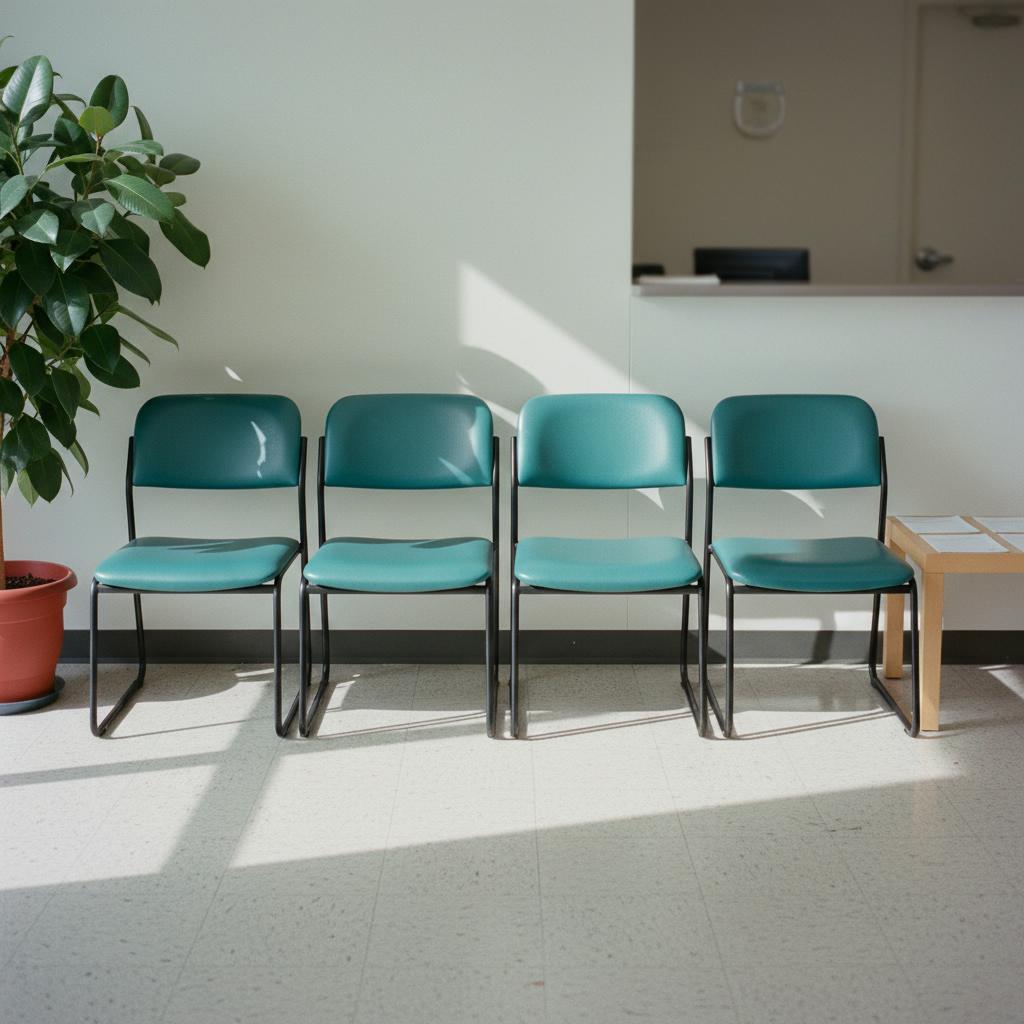
If the assessment shows you are close to Medicaid range, ask the center’s enrollment staff to screen you at the same time. Many patients qualify for Medicaid adult expansion coverage or have children eligible for CHIP without realizing it.
Why people pay more than they should
Never asking. The single biggest reason. Centers must inform patients the program exists, but a busy front desk and a patient who does not know the words “sliding fee discount” is a common combination. Say the phrase.
Assuming insurance disqualifies you. It does not. Being insured and being sliding-fee eligible are independent, and the out-of-pocket cap above exists precisely for people in that position.
Assuming immigration or residency status disqualifies you. Assessment is based only on income and family size. A center that adds its own residency or status test is out of compliance with the requirement that its policy apply uniformly to all patients.
Reporting the wrong family size. Family is defined in the center’s board-approved policy, and it is not always the same definition another program uses. If you support a dependent, ask how the center counts them before you write a number down. A family of one at $28,800 gets a smaller discount than a family of two at the same income.
Declining to provide income information. If you decline, the center has nothing to assess and you will be billed the full fee. If the paperwork is the obstacle, tell the intake staff, because they generally have a way through it.
Going to a clinic that is not a health center. Urgent care and hospital outpatient clinics have no obligation to offer a sliding fee schedule. Check the HRSA directory first.
Family planning care follows a related but separate federal rule. Title X-funded clinics charge nothing at or below the poverty line and use their own sliding scale up to 250 percent of it, a different grant program from the health center discount described above.
Frequently asked questions
Do I qualify if I have health insurance? Yes, if your income and family size fall within the center’s schedule. Insurance status is not part of the eligibility assessment. If you qualify, your out-of-pocket costs at that center cannot exceed what your discount pay class would have charged, though legal and contractual restrictions can apply in some situations.
What documents do I need to apply for the sliding fee discount? Each health center sets this in its own board-approved policy, so the exact list varies. Expect to show proof of income such as recent pay stubs, a tax return, or an employer letter, along with something establishing your family size. Call the center and ask before your visit.
Do I qualify if I am not a U.S. citizen? Sliding fee eligibility is assessed on income and family size only. Immigration status is not an eligibility factor for the discount program, and centers must apply their policy uniformly to all patients.
What is a nominal charge, and will I owe one? A nominal charge is a small flat fee a center may collect from patients at or below 100% of the poverty guideline instead of charging nothing. It has to be nominal from the patient’s perspective and must be less than the fee paid in the first discount pay class above 100%. Not every center uses one.
How long does the discount last? Until your circumstances change or the center reassesses you. Health centers must reassess patients periodically and must update their schedule whenever new Federal Poverty Guidelines are published, so report income or family size changes when they happen.



Leave a Comment