
6 min read · Last updated September 28, 2026
- You generally qualify for Closed School Discharge if you were enrolled when your school closed, or you withdrew no more than 180 days before the closure date.
- As of a 2023 rule change, the Department of Education must discharge an eligible loan automatically one year after the closure date, not three, if you have not completed a comparable program elsewhere.
- Completing a teach-out, finishing your program at another school that took over for the closed one, generally disqualifies you from discharge on the original loans.
- Discharge erases the loan balance, refunds payments already made on it, and directs the Department of Education to delete the associated adverse credit history.
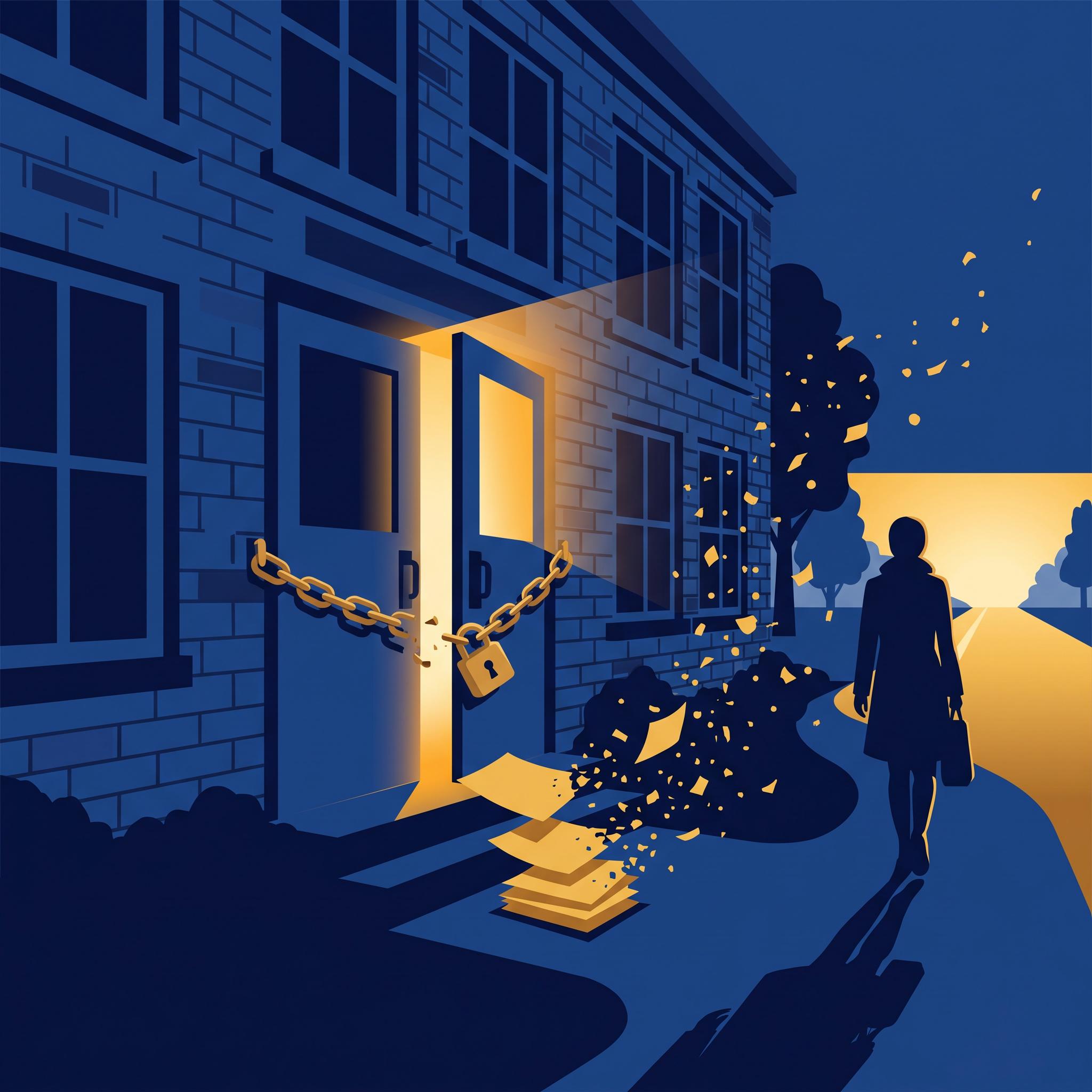
Closed School Discharge cancels the federal student loan debt tied to an enrollment when the school shuts down while you were there, or shortly after you left, and under current rule it now happens automatically for most eligible borrowers within a year, without an application.
In this article
- The 180-day enrollment window
- Why discharge is now automatic after one year
- The teach-out exception
- What a discharge actually erases
- How to apply if you are not covered automatically
- Frequently asked questions
Maria had $23,000 in federal loans when the for-profit college she attended closed its doors in late August. She had withdrawn the previous April, 141 days earlier, well inside the federal window for automatic relief, and she never enrolled anywhere else to finish the program. She did not need to file anything. A year after her school’s closure date, the Department of Education discharged the full balance on its own.
The 180-day enrollment window
Federal rule, in the Code of Federal Regulations (CFR) at 34 CFR 685.214(d)(1)(i)(B), sets the basic eligibility test: you qualify if you did not complete your program because the school closed while you were enrolled, or because you withdrew no more than 180 calendar days before the closure date. The Department can extend that 180-day lookback under a list of “exceptional circumstances” in 685.214(h), including a school’s accreditation being pulled, a state or federal finding that the school broke the law, or a failed teach-out that ran longer than 180 days.
Why discharge is now automatic after one year
The Department of Education adopted this one-year automatic-discharge rule in a final regulation published in the Federal Register on November 1, 2022 (87 FR 65904), which took effect July 1, 2023 and now lives at 34 CFR 685.214(c). It requires the Department to discharge an eligible loan without any application, one year after the school’s closure date, if the Department’s own records show the borrower did not complete the program through a teach-out or by transferring to another approved school. This replaced an older rule that asked borrowers to wait three years and certify they had not re-enrolled before an application could even be considered. If you accepted a teach-out offer but never finished it, the same automatic discharge applies, timed instead to one year after your last date of attendance in that teach-out program.
The teach-out exception
Completing a teach-out, finishing your program at a different, approved school that stepped in for the closed one, generally disqualifies you from discharge on the loans tied to your original enrollment, under 685.214(d)(1)(i)(C). The reasoning is that you received the credential you enrolled for, even if it came from a different institution. The narrow exception: if you started a teach-out but did not finish it, you remain eligible, with your automatic-discharge clock running from your last date of attendance in the teach-out program rather than the original closure date. A teach-out that failed to deliver on its own terms, or one your school never actually completed as agreed, can also preserve your eligibility under the exceptional-circumstances provisions.
What a discharge actually erases
Under 685.214(b), a closed-school discharge relieves you of any past or present obligation to repay the loan, including accrued interest and collection costs, and it entitles you to reimbursement of amounts you already paid on that loan, whether you paid voluntarily or the money was collected through wage garnishment or another enforced method. It also removes any default status tied to the loan, restores your eligibility for federal student aid going forward, and requires the Department of Education to report the discharge to all consumer reporting agencies so the adverse credit history tied to that loan is deleted. A discharge is specific to the loans from that enrollment. It does not touch other, unrelated federal loans you may be carrying from a different school or program.
This section covers Direct Loans, the loan type nearly everyone borrows today. If your loans are older Federal Family Education Loans (FFEL) or Perkins Loans, a parallel discharge rule applies under a different regulation, with the same basic closure and 180-day logic but its own procedural details. Tell your loan servicer which loan type you hold before you assume the Direct Loan timeline applies to you.
| Situation | Closed School Discharge | Borrower Defense to Repayment |
|---|---|---|
| What triggers it | The school closes while you’re enrolled, or within 180 days after you withdraw | The school misrepresented facts or broke state law in a way that caused you harm |
| Governing rule | 34 CFR 685.214 | 34 CFR 685.222 / 685.206 |
| Does the school need to have closed | Yes | No |
| Automatic without applying | Often, 1 year after closure if you did not complete a teach-out | No, requires a filed application and review |
How to apply if you are not covered automatically
If the Department of Education does not already have enough information to discharge your loan automatically, you must file your own application under 685.214(d)(1), attesting under penalty of perjury to the closure date, your enrollment or withdrawal timing, that you did not complete a teach-out, and any related payments you may have received from a state tuition-recovery fund. If your school closed for reasons connected to misconduct rather than simple closure, the separate Borrower Defense to Repayment program, which does not require a closure at all, may also apply and is worth reviewing alongside this one.
Frequently asked questions
How long after my school closes will my loan actually be discharged? If the Department of Education already has enough information to confirm you qualify and did not complete a teach-out, it must discharge the loan automatically one year after the closure date, with no application from you. If you’re not covered automatically, you can file your own application at any point after the closure.
I withdrew before my school actually closed. Do I still qualify? Yes, if you withdrew no more than 180 days before the official closure date. This lookback exists specifically for students who saw trouble coming and left before the doors shut. The Department can extend that window further under certain exceptional circumstances, such as a failed teach-out or an accreditation loss.
What happens if I started a teach-out program but never finished it? You remain eligible for closed-school discharge. Your automatic one-year discharge clock is measured from your last date of attendance in the teach-out program rather than from the original school’s closure date, since you never completed the replacement program either.
Will a closed-school discharge affect my other student loans? No. The discharge applies only to the loans tied to the enrollment at the closed school. Any other federal loans you hold from a different school or program are unaffected and remain your responsibility to repay under their own terms.
Does a closed-school discharge remove the debt from my credit report? Yes. Federal rule requires the Department of Education to report the discharge to all consumer reporting agencies it previously reported the loan to, and to delete the adverse credit history associated with that specific loan once the discharge is processed.

Leave a Comment