
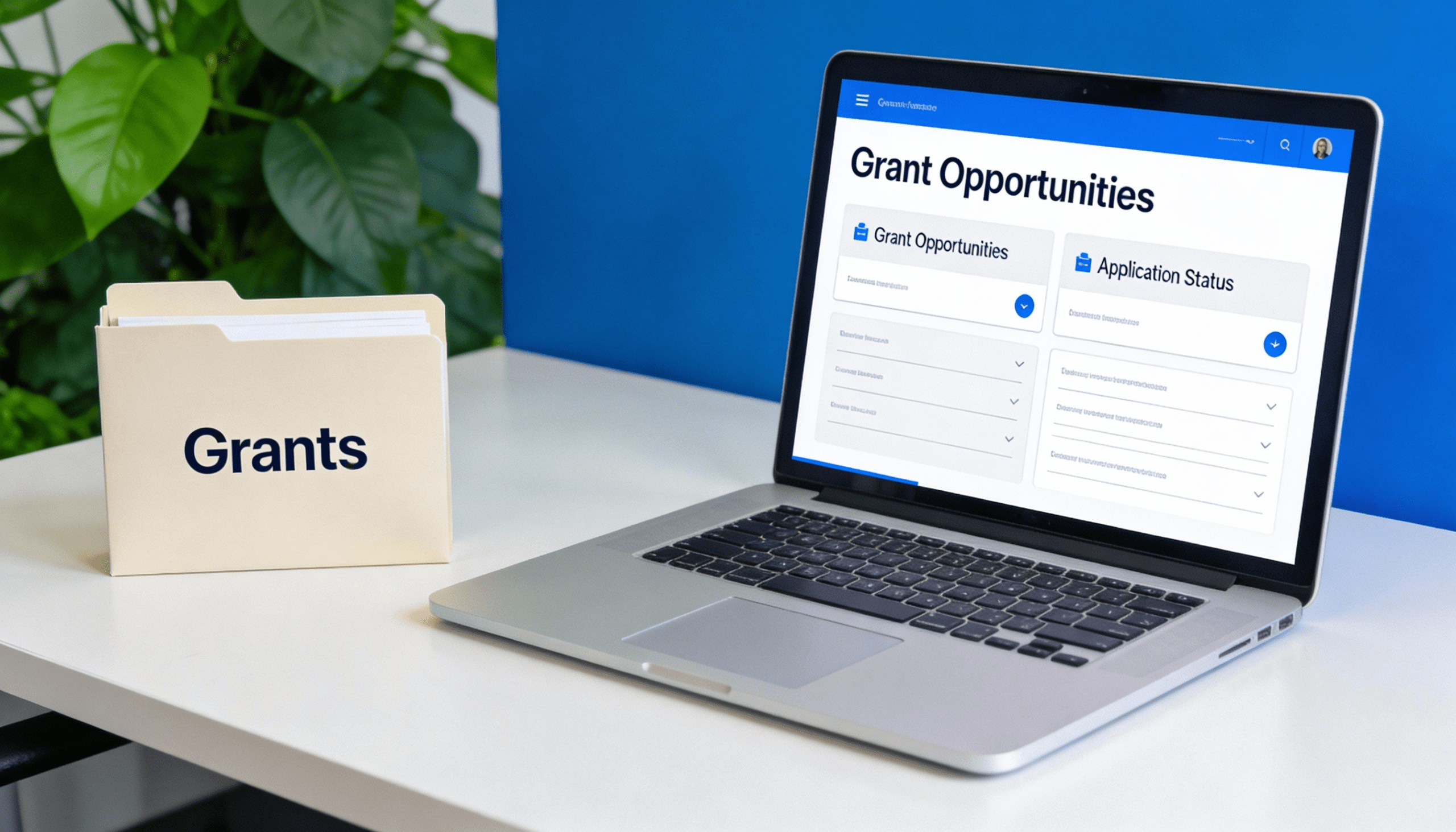
Finding legitimate grant opportunities can be difficult when funding programs are spread across government agencies, nonprofits, and other organizations.
Grant matching services aim to simplify that process by organizing existing opportunities based on factors such as location, income, or the type of funding needed.
But not every platform is trustworthy, so understanding how legitimate matching services work… And recognizing the warning signs of fake grant offers… Is essential before sharing personal information or paying a fee.
For example, Priscilla Nakamura, a home health aide in Topeka, Kansas, got a text message last month that read: “Congratulations! You have been approved for a $10,000 federal grant. Reply YES to claim your funds.”
A follow-up call asked her to pay a $249 “processing fee” by gift card within 24 hours to release the money.
Maria had heard of grant matching services before, so the offer did not sound impossible. But something about the gift card request, and the 24-hour deadline, made her pause before sending a single dollar.
She needed a fast way to tell a real grant opportunity from a scam, and she needed it before she paid anything or gave out her bank information.
What a Legitimate Grant Matching Service Actually Does
A legitimate grant matching platform does one job well. It compares your situation, such as your state, income, business type, or household needs, against a list of grants that already exist.
Those grants come from public sources like Grants.gov, the federal government’s official listing site, or from nonprofit foundations with a stated mission and public tax filings.
The platform does not create new money. It does not decide who wins a grant.
In short, the platform only organizes public information so you spend less time searching and more time applying to programs you actually qualify for. A real service will say this plainly, usually in its first few sentences.
This distinction matters because scammers rely on people not knowing it. If a caller claims they can personally guarantee you a grant, or that they control which applications get approved, that claim alone is a warning sign.
No legitimate matching service, and no government employee, has that kind of authority.
The Five Questions That Separate Real Offers From Scams
Before you respond to any grant message, run it through five quick questions. You can do this in under five minutes, and it will save you far more time and money than it costs.
- Did you apply for anything, or did the message arrive out of nowhere?
- Is anyone asking you to pay a fee before you receive money?
- Is there a countdown, a same-day deadline, or pressure to act immediately?
- Is the “grant” described as covering personal bills like rent or credit cards?
- Is anyone asking for your bank account number, card number, or a wire transfer?
A single “yes” answer does not automatically mean fraud. But two or more “yes” answers, especially an upfront fee combined with urgency, matches the pattern the Federal Trade Commission (FTC) has documented in thousands of grant scam reports.
The FTC is the federal agency responsible for tracking and stopping consumer fraud, including fake grant offers.
Why the Deadline Pressure Works
Scammers use urgency on purpose. A 24-hour deadline gives you no time to call a friend, search the sender’s phone number, or look up the program name.
That rushed feeling is the product, not a side effect, and it is designed to shut down the part of your brain that normally asks questions.
Real grant programs do the opposite. They post application windows weeks or months in advance, and they expect you to take time gathering documents and comparing options.
If a message will not let you slow down, treat that alone as a reason to stop and verify before you do anything else.
Red Flags Versus Real Signals, Side by Side
The table below lines up the warning signs of a grant scam next to the signs of a legitimate free resource. Keep it nearby the next time you get an unexpected grant offer.
| Red Flags of a Grant Scam | Signs of a Legitimate Free Resource |
|---|---|
| Asks for a fee, deposit, or “processing charge” before you get any money | Never asks for payment at any step, application or approval |
| Calls it a “government grant” for personal bills, credit cards, or rent | Points you to grants.gov, the official federal source, or a specific named program |
| Pushes a same-day or 24-hour deadline to “lock in” your approval | Gives you real application windows and lets you research before applying |
| Asks for your bank account, debit card, or a wire transfer to “release funds” | Explains that grants are paid through the awarding agency or organization, not through a matching site |
| Contacted you first, by text or robocall, about a grant you never applied for | Publishes a clear, public mission statement and is easy to find information about independently |
How to Vet a Specific Platform in Ten Minutes
If a grant matching site looks promising, do not stop at the homepage. A few quick checks will tell you whether it is worth your time and your information.
- Search the platform’s name plus the word “complaint” or “scam” and read what comes up.
- Look for a physical address and a working phone number, not just a contact form.
- Check whether the site names the specific grants it draws from, rather than vague promises of “billions in unclaimed funds.”
- Read the fine print for any mention of a fee, membership charge, or “premium” tier tied to applying.
- Confirm the site never asks for a Social Security number or bank account before you have chosen to apply to a specific program.
A platform that passes all five checks is not automatically guaranteed to get you funding, since no matching service can promise that outcome.
But it is behaving like a real information source instead of a collection scheme built around a fake sense of hope.
Where Real Free Matching Actually Comes From
The single most reliable starting point is Grants.gov’s own page on grant scams. It lists the exact tactics fraud rings use and confirms that federal grants never require a fee to apply or receive funds.
Grants.gov is the U.S. government’s central listing of federal grant opportunities, and it is free to search directly.
A legitimate grant matching platform will often link back to sources like this one, rather than asking you to trust its word alone. It will also tell you plainly what it is not. It is not a guarantee of funding, not a government agency, and not able to speed up or skip a real application process.
For nonprofit-run programs, you can usually confirm the organization is real by checking its stated mission, its listed staff, and whether it shows up in independent nonprofit registries.
A group that avoids naming any of that, while still asking for your personal details, has not earned your trust yet.
What “Guaranteed” Really Means
No legitimate source, public or private, can guarantee that you personally will receive a specific grant. Grants are awarded through a review process, and most programs receive more qualified applicants than they have funding to cover.
Any message promising a guaranteed award, especially before you have filled out an application, is describing something that does not exist.
Think about how strange this promise would sound in any other setting. A bank does not approve a loan before reading your application. A landlord does not hand over keys before checking your references.
An employer does not offer you a job before reviewing your resume.
A grant offer that skips every normal step, and hands you an approval before you have done anything, is not describing a faster process. It is describing a story built to get your money or your information before you notice the missing steps.
This is also true of the dollar figure. A message promising an exact amount, like the $10,000 Maria was offered, before you have applied or been reviewed, should be treated as a red flag on its own.
Real grant amounts vary by program and by applicant, and no one can know your award before you apply.
Funding cycles also matter here. Most grant programs set a fixed budget for the year, review applications in batches, and close once the money runs out.
A scammer will never mention any of that, because a fake grant has no budget to run out of and no competing applicants to lose to.
If You Already Paid, Shared Information, or Are Unsure
If you already sent a fee, shared your bank details, or suspect you are dealing with a scam, act quickly.
Call your bank or card issuer first and ask them to flag or reverse the transaction. Then file a report at reportfraud.ftc.gov, the Federal Trade Commission’s official fraud reporting site, so investigators can track the pattern.
Reporting does not just help you. It builds the case history that shuts these operations down for the next person who gets the same text message Maria did. It also takes less time than most people expect, usually about ten minutes.
Watch your credit report and bank statements closely for the following few weeks, since scammers who get one piece of information often try to use it again or sell it to another operation.
Setting a free fraud alert with one of the major credit bureaus adds another layer of protection while you monitor the situation.
Before you delete anything, save the original text message, email, or call log, along with the phone number, sender address, and any screenshot of the request.
A specific, well-organized record like this makes your bank dispute faster and gives investigators something concrete to trace back to the same operation targeting other people.
A Simple Way to Decide, Before You Reply
Maria’s answer came down to one detail. A legitimate program never asked her for money first. The text asking for a $249 gift card failed that single test, and she was right to walk away from it.
Use that same rule as your default. If money has to move from you to anyone before a grant is paid to you, stop. Verify the offer directly through grants.gov or a nonprofit’s own published materials, not through the phone number or link the message gave you.
A legitimate opportunity will still be there once you have checked it out, and a fake one will disappear the moment you stop responding.
Grant matching services can genuinely save you hours of searching when they are built around public listings and clear disclosures. The value they offer is organization, not access you could not get on your own. Judge every offer by that standard, and the fake ones will be easy to spot.
Share what you learn with family members and neighbors who may get the same message next. Grant scams often target the same list of phone numbers repeatedly.
A quick warning passed along in person or by text can stop a second household from paying a fee for a grant that was never real.



Leave a Comment